
.svg)
At Energy Capital Ventures®, we evaluate emerging molecule technologies through the lens of infrastructure, industrial compatibility, and real-world scalability. Across the Green Molecules® landscape, the biggest question is often not whether a new process works in the lab, but whether it can be deployed at scale within existing systems.
Plasma catalysis, sometimes referred to as electrically driven chemistry, has long held theoretical promise. It offers a way to activate stable molecules like CO₂ and methane without the need for extreme heat or pressure, potentially opening new pathways for lower-energy production of fuels, chemicals, and materials. But for years, the challenge has been turning that promise into commercially viable systems.
That gap between promise and practice is now beginning to narrow. As energy demand surges — driven by data center growth, domestic manufacturing, and a broader reindustrialization push — the need for flexible, distributed, and clean molecule production is growing more urgent. Electrified chemistries like plasma catalysis offer one of the few scalable ways to meet this need without duplicating the carbon intensity of past systems.
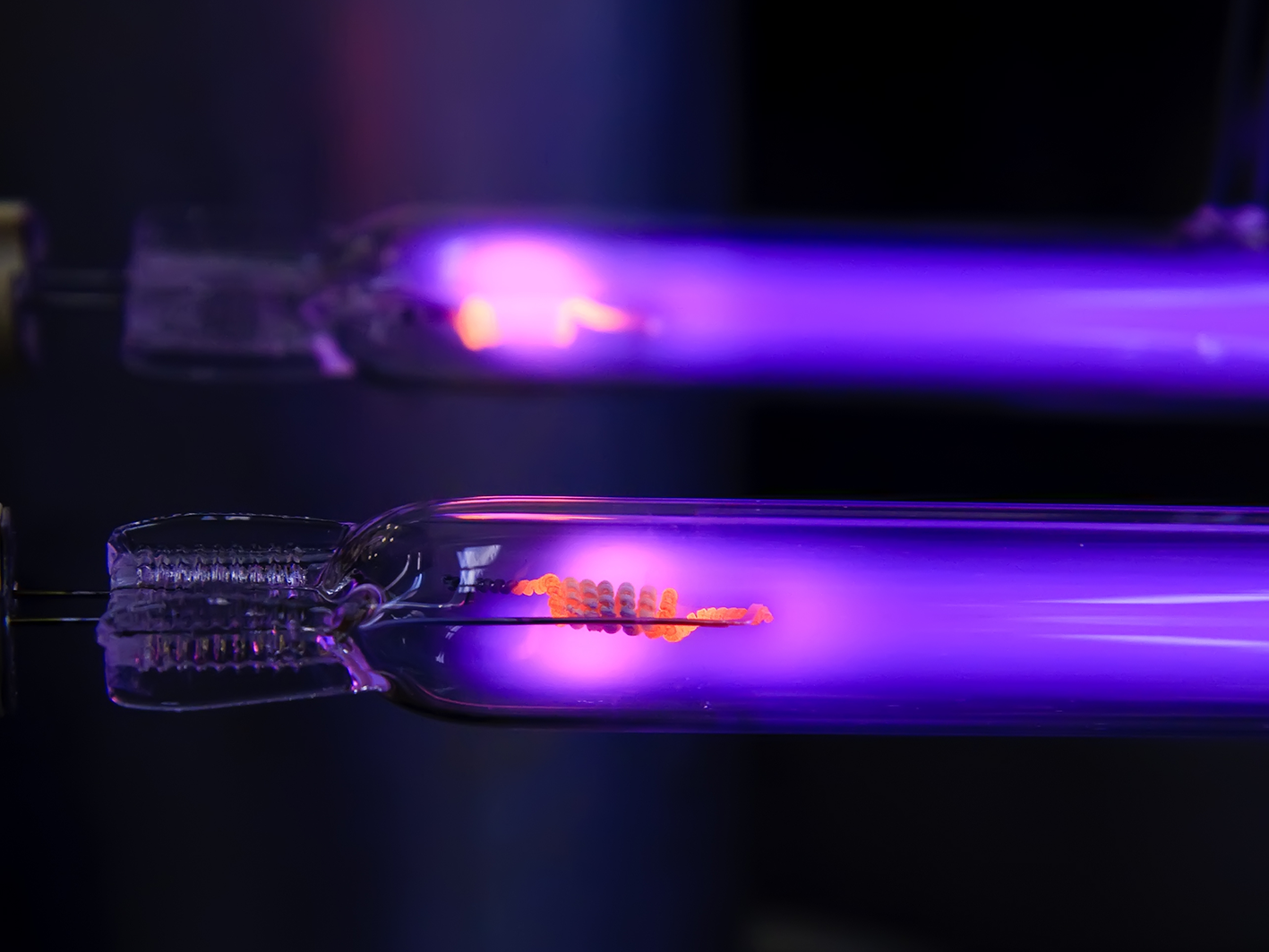
Plasma is the fourth state of matter, created when electrical energy excites a gas enough to separate electrons from atoms. In this energized state, molecules become highly reactive, allowing chemical bonds to break and reform without relying on bulk thermal energy. In contrast to traditional thermally-driven chemistry, plasma enables selective and energy-efficient activation rather than brute-force heating.
For Green Molecules®, this distinction is critical. Many decarbonization pathways, including CO₂ conversion, methane upgrading, and fluorinated gas destruction, are constrained by the energy intensity of conventional processes. Plasma offers a fundamentally different lever: electrification of chemistry itself. When paired with clean power, plasma catalysis creates a pathway to produce fuels and chemicals with dramatically lower lifecycle emissions.
Equally important, plasma systems are inherently modular and electrically driven. That makes them compatible with distributed deployment, intermittent power sources, and retrofit integration, all of which are essential characteristics for near-term adoption across existing industrial infrastructure.
Despite its scientific appeal, plasma catalysis has long struggled to translate into viable commercial solutions. These challenges are rooted in a few fundamental limitations that have constrained adoption across the energy and industrial sectors.
First, energy efficiency. Early plasma systems required significant electrical input, often consuming more energy than the chemical energy content of their outputs. This mismatch made processes economically uncompetitive and undermined claims of environmental benefit—especially when powered by non-renewable sources. The lack of effective coupling between plasma and catalytic processes also meant much of the input energy was lost as heat or unproductive reactions.
Second, reaction control. Plasma is an inherently chaotic environment, rich in ions, radicals, and excited species. Without carefully engineered catalysts and reactor architectures, these systems often produced a mix of partial products or undesired byproducts. Achieving high selectivity—critical for the production of specific fuels or chemicals—proved difficult, limiting practical applications in industries that demand consistency and purity.
Third, scalability and durability. Many early plasma reactors functioned well in academic labs but failed under industrial conditions. Reactor materials degraded quickly under high-energy discharge, power electronics were not sufficiently robust, and upscaling introduced challenges in maintaining uniform plasma generation and consistent product output. Additionally, integrating plasma systems into existing infrastructure—often designed around thermal or catalytic norms—proved costly and complex.
As a result, plasma catalysis remained largely confined to the research community or niche applications like semiconductor manufacturing, despite decades of promising theoretical studies. Only recently, with advances in power electronics, materials science, and catalyst engineering, has the field begun to overcome these longstanding barriers.
One of Energy Capital Ventures®’ portfolio companies, enadyne, represents a new generation of plasma catalysis designed explicitly around these historical constraints. Instead of using heat and pressure like traditional reactors, enaDyne’s technology uses electricity to activate gases like CO₂ and methane in a low-temperature environment. This electrified reaction happens in a compact chamber between ceramic electrodes, where a glowing “cold plasma” forms and drives precise chemical transformations.
What makes this a breakthrough is the control and efficiency. By pairing the plasma field with a custom solid catalyst, enaDyne can selectively produce essential building-block chemicals like syngas, methanol, and ethylene — all with significantly less energy than conventional processes. And because the system is modular, hundreds of small plasma reactors can be packed into a single container. These units can sit directly next to biogas plants, semiconductor fabs, or chemical facilities, turning low-value emissions into valuable molecules.
The technology is also versatile. In addition to CO₂ conversion, it can neutralize harmful fluorinated gases — a growing challenge in industries like refrigeration and microelectronics. Enadyne’s ability to clean up these niche but potent emissions adds relevance across sectors.
As the U.S. enters a new phase of energy expansion — driven by AI-fueled data center growth, the reshoring of manufacturing, and an industrial policy shift toward domestic production — demand is rising for compact, flexible chemical production systems that work with electricity rather than fossil heat. Enadyne offers exactly that: a deployable platform for clean molecule manufacturing at the edge of existing infrastructure.
In short, Enadyne is making plasma catalysis real. It’s a practical leap that aligns with both decarbonization goals and the evolving shape of U.S. industrial energy demand.
Plasma catalysis is not a replacement for other Green Molecules® technologies. Instead, it serves as an enabling layer that fills important gaps across the decarbonization landscape. Its value lies in modularity, electrification, and the ability to precisely activate chemical reactions that would otherwise require high temperatures or complex infrastructure.
enaDyne’s platform is a clear example of how plasma catalysis can open a new chapter in the Green Molecules® ecosystem. By combining non-thermal plasma with proprietary catalysts, their system is able to convert industrial off-gases and hazardous emissions into useful chemical building blocks. This capability allows for electrified chemical production and emissions abatement in settings that are traditionally hard to decarbonize.
From a systems perspective, plasma catalysis expands the possibilities for how and where Green Molecules® can be produced. It enables cleaner and more distributed deployment models, avoiding the need for centralized, capital-intensive projects. For natural gas infrastructure, plasma offers new ways to reduce emissions and synthesize fuels by transforming CO₂ and methane into syngas or other intermediates. This creates a role for gas assets within a cleaner molecular economy.
In essence, plasma technologies like enaDyne’s do more than support the Green Molecules® ecosystem. They help define what the next generation of clean, electrified chemistry can look like.
Plasma catalysis offers a pathway to decarbonization that aligns with how real systems operate. For utilities and industrial players, it introduces a flexible toolset that can be layered onto existing infrastructure, rather than requiring a full reset. Its modular nature supports piloting and gradual rollout, allowing teams to reduce emissions while preserving continuity in operations and capital planning.
For investors, plasma technologies reinforce the value of platforms that enable multiple decarbonization routes. The opportunity lies not in any single application, but in the ability to bridge inputs and outputs across capture, conversion, and utilization. Plasma can serve as connective tissue in an increasingly diverse molecular energy system.
For entrepreneurs and technical teams, the takeaway is that deployment-readiness matters as much as breakthrough performance. The solutions that will scale are those that account for integration, cost sensitivity, and the realities of the built environment. Plasma catalysis, when engineered for reliability and interoperability, checks those boxes.
Plasma catalysis is moving beyond the lab. Technologies like enadyne’s show that electrified chemistry can now meet the thresholds of control, efficiency, and durability required for industrial use.
As the Green Molecules® ecosystem evolves, meaningful progress will come from technologies that connect where we are today to where we need to go. Plasma offers one of those connections. It expands the toolkit for decarbonization — enabling the production of essential molecules with fewer emissions, closer to where they’re needed, and powered by clean electricity.
This is especially relevant in today’s energy landscape. The rise of data centers, the reshoring of manufacturing, and a broader push toward energy resilience are all driving demand for distributed, modular, and electrified systems. Plasma catalysis fits this moment: it allows industries to rethink how and where they make chemicals and manage emissions, without overhauling entire facilities.
At Energy Capital Ventures®, we see plasma catalysis not as a standalone solution, but as a foundational layer that strengthens the broader molecular transition. It reflects our approach to investing in technologies that balance scientific ambition with practical integration and measurable impact.
